
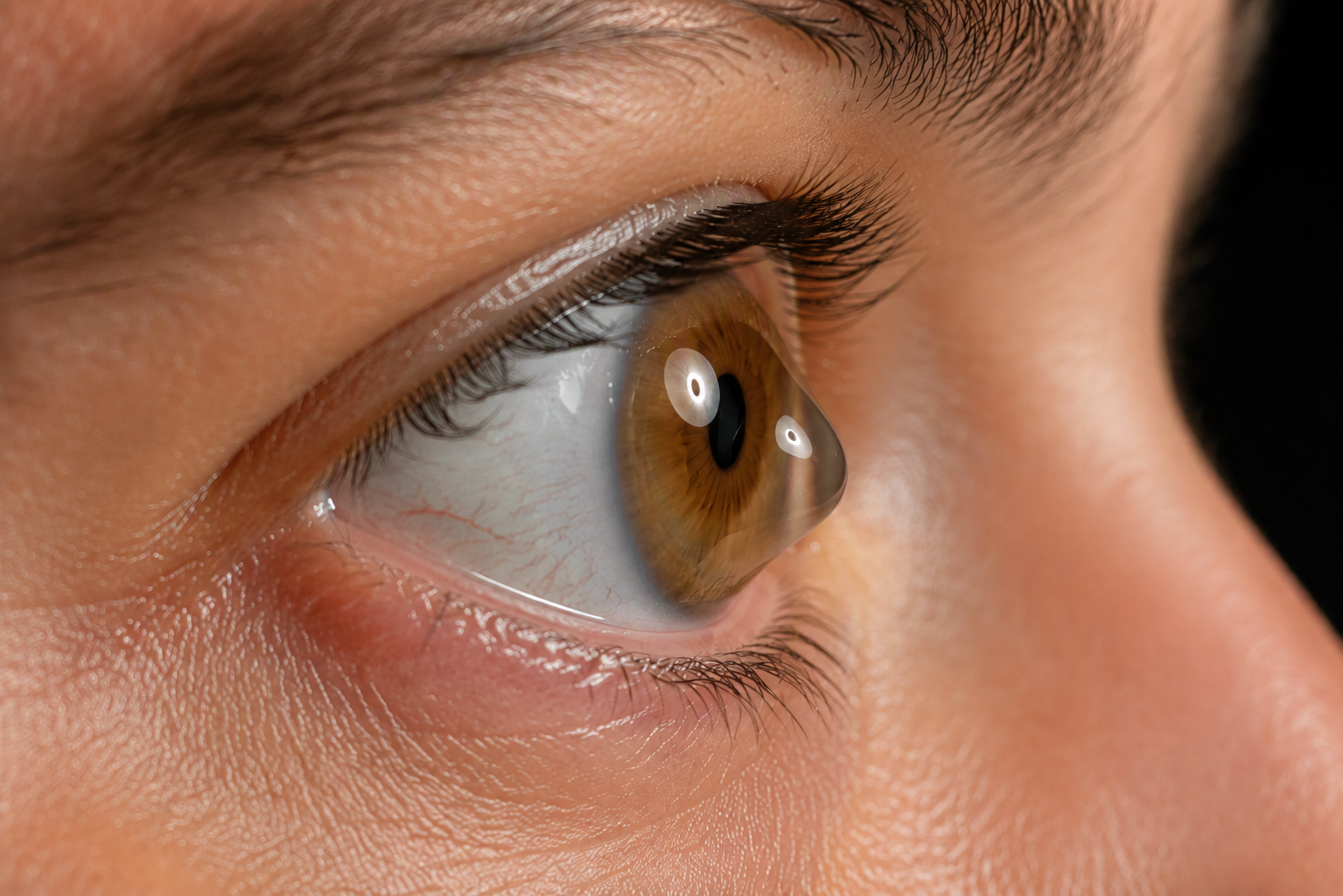
At High Point University Eye Health, we offer advanced specialty contact lens services for patients whose vision or eye health needs may not be fully addressed with traditional soft contact lenses.
Specialty contact lenses are individually selected and fitted based on the shape of the eye, the health of the cornea, the patient’s prescription, and their visual needs. Our doctors use detailed measurements and advanced diagnostic technology to develop a personalized contact lens plan focused on clear vision, comfort, and long-term eye health.
Request an AppointmentWho May Benefit from Specialty Contact Lenses?
Specialty contact lenses may be recommended for patients with:
-
Keratoconus or other corneal irregularities
-
Significant astigmatism
-
High or complex prescriptions
-
Severe dry eye symptoms
-
Corneal scarring or injury
-
Vision changes following corneal surgery
-
Difficulty achieving clear or comfortable vision with traditional contact lenses
-
Certain pediatric or progressive vision conditions
-
Previous contact lens intolerance
Types of Specialty Contact Lenses
Depending on your individual needs, your doctor may recommend one of several specialty lens options.
Scleral Contact Lenses
Scleral lenses are larger-diameter, gas-permeable lenses that rest on the white portion of the eye and vault over the cornea. A fluid reservoir beneath the lens can provide a smooth optical surface while helping protect and hydrate the cornea.
These lenses may be particularly helpful for patients with keratoconus, irregular corneas, corneal scarring, severe dry eye, or certain post-surgical conditions.
Rigid Gas-Permeable Lenses
Rigid gas-permeable lenses maintain their shape on the eye and can provide crisp, stable vision for patients with astigmatism, keratoconus, or other corneal irregularities.
Although they are smaller than scleral lenses, they allow oxygen to reach the cornea and may provide better visual clarity than traditional soft lenses for some patients.
Hybrid Contact Lenses
Hybrid lenses combine a rigid gas-permeable center with a soft outer skirt. This design is intended to provide the visual clarity of a rigid lens with the comfort and stability of a soft lens.
Custom Soft Contact Lenses
Custom soft lenses can be manufactured in a wider range of prescriptions, shapes, and diameters than standard soft contact lenses. They may be appropriate for patients with high prescriptions, unusual corneal measurements, significant astigmatism, or other specialized visual needs.
Prosthetic and Therapeutic Contact Lenses
In certain cases, specialty lenses may be used to protect the surface of the eye, improve comfort, reduce light sensitivity, or improve the cosmetic appearance of an injured or irregular eye.
A Personalized Fitting Process
Specialty contact lens fitting is a detailed process that may require multiple appointments. During your evaluation, our doctors may:
-
Perform a comprehensive eye examination
-
Evaluate the health and shape of the cornea
-
Take advanced measurements or corneal images
-
Place diagnostic lenses on the eyes
-
Assess vision, comfort, movement, and fit
-
Provide personalized instruction on lens insertion, removal, and care
-
Schedule follow-up visits to monitor eye health and refine the fit
Because specialty lenses are often custom designed, adjustments may be necessary before the final prescription and lens design are determined.
Clearer Vision Through Advanced Care
Patients who have previously been told that they cannot wear contact lenses may still have options. Our team combines advanced technology, clinical expertise, and individualized care to help patients achieve the clearest and most comfortable vision possible.
Contact High Point University Eye Health to schedule a specialty contact lens evaluation and learn which options may be appropriate for you.
Specialty contact lens evaluations, fittings, materials, and follow-up visits may involve additional fees. Insurance coverage varies by plan and diagnosis.